
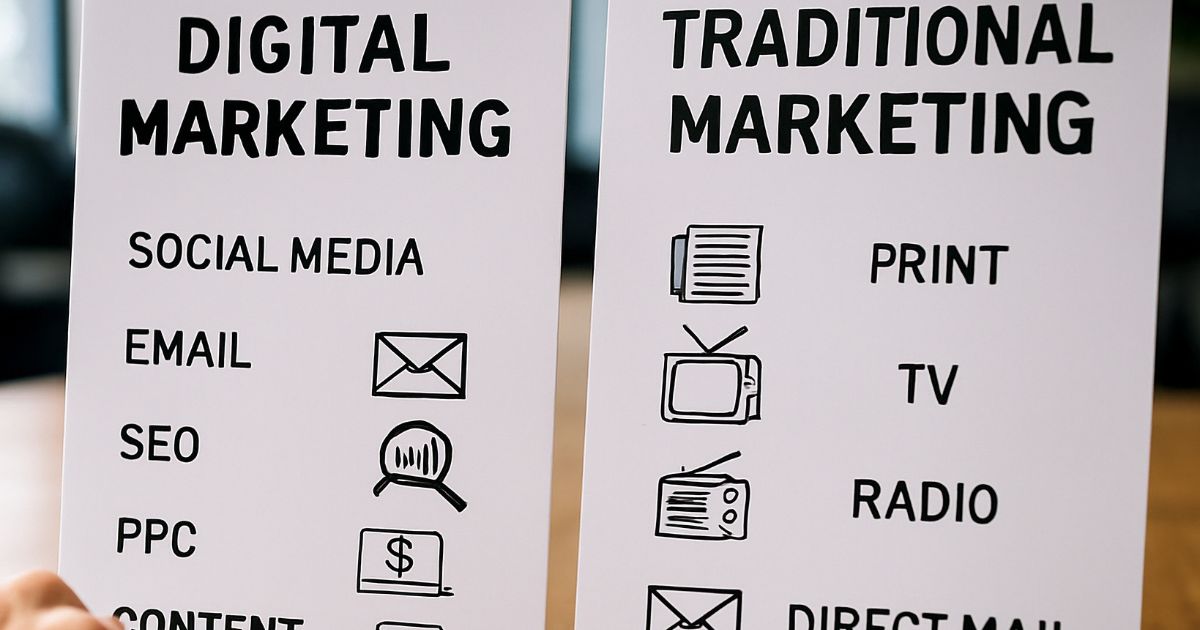
Marketing continues to evolve as consumer expectations, technology, and media habits shift. In 2026, businesses face more choices than ever when deciding where to invest their marketing budget. While digital marketing continues to dominate, traditional marketing still offers unique advantages depending on your audience and goals. This article breaks down the pros and cons of both approaches to help you determine the right mix for your business.
Traditional Marketing in 2026
Traditional marketing includes print advertising, brochures, flyers, billboards, direct mail, radio, and television. These methods have been used for decades — and despite the rise of digital marketing, they still remain relevant in certain industries.
Pros of Traditional Marketing
1. Local Reach & High Trust
Traditional media such as local newspapers, magazines, and radio stations remain effective for reaching geographically focused audiences.
Many consumers still trust print and broadcast advertising more than digital ads.
2. Physical Materials Leave a Lasting Impression
Items such as mailers, postcards, and promotional products (pens, mugs, flyers) can be kept, referenced later, and shared physically.
3. Easy to Understand
Older audiences and less tech-savvy customers often prefer traditional formats. There’s no need to navigate websites, QR codes, or downloads.
Cons of Traditional Marketing
1. Higher Cost
Print ads, billboards, radio spots, and physical materials come with significantly higher production and distribution costs.
2. Limited Engagement
Traditional marketing is passive — customers can’t easily click, comment, or share.
3. Harder to Measure ROI
Tracking results is challenging. You may not know how many people saw a flyer or where a customer heard about you.
Digital Marketing in 2026
Digital marketing includes social media, online advertising, SEO, email marketing, content creation, video marketing, and more. As technology advances, digital marketing continues to evolve rapidly.
Pros of Digital Marketing
1. Global Reach & Scalability
Digital channels allow businesses to reach local, national, and international audiences instantly.
2. Personalized & Targeted Campaigns
Digital platforms use data to deliver ads and content tailored to specific audiences, increasing effectiveness and reducing waste.
3. Cost-Effective with High ROI
Digital campaigns are affordable for both small businesses and enterprise brands — and offer strong ROI when optimized correctly.
4. Higher Engagement
Digital content encourages interaction through comments, likes, shares, email replies, and calls to action.
5. Real-Time Data Tracking & Analytics
Businesses can see what’s working immediately and adjust strategy on the fly.
Cons of Digital Marketing
1. High Competition
Because digital marketing is accessible to everyone, brands must work harder to stand out.
2. Requires Ongoing Management
Trends, algorithms, and platforms change constantly — meaning digital campaigns require continuous optimization.
3. Exposure to Negative Feedback
Brands are more vulnerable to public criticism, online trolls, and negative reviews.
Which Strategy Should You Choose in 2026?
Traditional and digital marketing each play a role in a modern marketing plan.
The right strategy depends on:
- Your audience
- Your budget
- Your goals
- Your industry
- How quickly you want results
Most businesses benefit from a blended approach — but digital marketing offers more flexibility, stronger insights, and higher scalability for long-term growth.
Want Help Building a Marketing Strategy That Works in 2026?
At T.E. Digital, we help businesses combine traditional and digital marketing in a strategic way that fits their goals and budget.
Contact us today to discuss a customized marketing plan for 2026.


latest video

news via inbox
Nulla turp dis cursus. Integer liberos euismod pretium faucibua